
Is Your Work-From-Home Family Life As Safe As It Can Be? We Can Help You Find Out!
Disclosure: Our content is reader-supported. This means we may earn an affiliate commission for links you click on. There’s no cost to you. If you’d like to learn more about how Anywhere and Anytime Careers is funded, click here.

We get it – you’re busy. Between your kids’ needs, your clients’ needs, and trying to carve out a little space for yourself and your partner, your days are sometimes a whirlwind. So why take the time to read these five important home security tips for remote workers?
Well, if you work from home, you already know the acrobatic act of managing your professional responsibilities and your family life. Sure, you’ve got more flexibility and freedom – but you also have a million details to consider when you’re the boss and your home is your workplace.
One of those details is making sure your home is safe and secure for both your family and your work life, because, when emergencies happen, they don’t usually allow room to plan. Whether it’s a house fire where you need to evacuate your children, or keeping sensitive professional information protected, taking steps now will prevent panic later.
Is Your Internet Connection Secure?
Your home’s Internet connection is the backbone of your remote work setup. It’s probably also important for family functions like schoolwork, operating smart devices, social networking, streaming, and gaming.
So you need that vital line to the world to be safe from cyber threats. There are some common-sense ways to do that:
- Use a strong, unique password for your Wi-Fi network
- Enable encryption settings on your router.
- Install a reliable antivirus program
- Use a virtual private network (VPN) to add another layer of security for your work data and personal information.
- Update your software regularly to prevent hackers from taking advantage of any vulnerabilities.
Of course, you also want to keep your kids safe online. Here’s a good video to help get a conversation started with younger kids.
Can You Monitor Your Baby While Working From Home?
One of the greatest benefits of remote work is being able to be home with your kids. But with babies, that often means squeezing in your tasks while your little one is napping.
If you’re living this reality, you probably feel pulled in two directions. You want to be sure your infant is safe and comfortable. And you need to focus on your work, too.
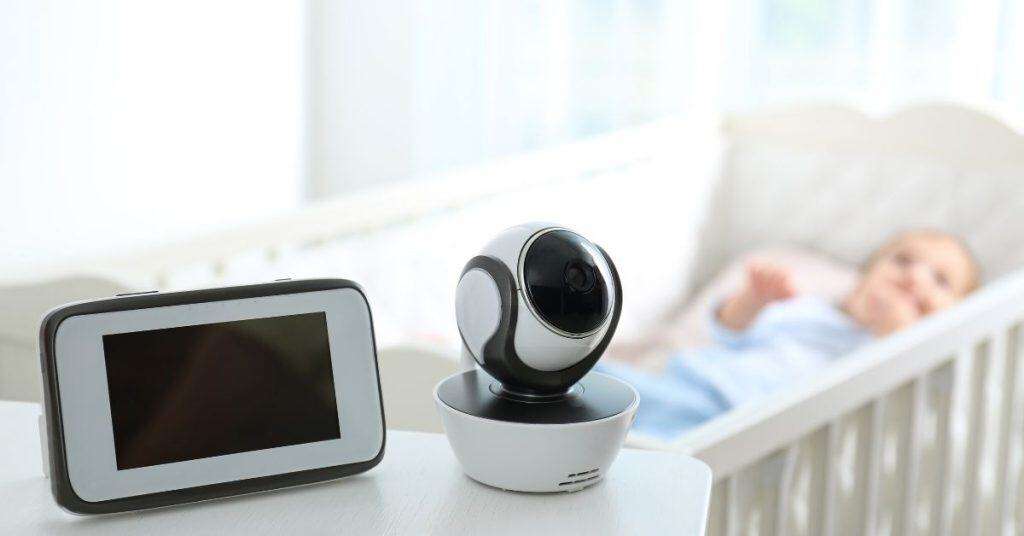
That’s when a reliable baby monitor can become your best friend.
Consider investing in a model that has a video feed and two-way audio. This lets you keep an eye and ear on your child from your workspace. Make sure the baby’s monitor is in a safe spot where they can’t reach it. Connecting it to your home’s secure Wi-Fi network means you can check in whenever you need to.
If you’re not sure what kind to get, this unbiased baby monitor review from Consumer Reports may help,
Is Your Home Safety Equipment Up-To-Date?
This might seem like an odd question for a post on home security tips for remote workers. After all, you live in your home, so home safety goes with the parenting territory.
But there are some things to consider. As a work-from-home parent, you’ll be home more of the time than those who work outside the home. And your family might be, too.
That means you need to be sure everyone is safe and knows what to do in an emergency. And it means that you should check your home’s fire safety, too.
Here are some questions to ask yourself:
- Does everyone in your home know what to do if there’s a fire?
- Do you have a family evacuation plan?
- Can you easily get to the places your children are likely to be from your office?
- Does your home have signage to let firefighters know there are children and/or pets inside?
- Do you have up to date fire extinguishers and smoke/carbon monoxide detectors?
It’s also a good idea to make sure your smoke detectors are up-to-date and functioning properly.
Fire safety preparation can make the difference between life and death for you and your family.
Remember to check the batteries on each detector every six months. It might be a good idea to make sure your fire extinguishers haven’t expired at the same time. Replace your home’s smoke detectors every 10 years, or sooner if the manufacturer recommends, and clean them as needed. Retire and replace fire extinguishers when they’re expired.
These are small yet significant investments that will protect your family and your home. Adding them to your urgent list will bring you safety and peace of mind.
Looking for a good way to talk with your kids about fire safety? Here’s some video help!
Have You Thought About Physical Security Measures?
Now that you’ve taken care of keeping tabs on your sleeping baby and taken fire safety measures, it’s a good time to consider whether your home has the physical security it needs.
This can include:
- Window guards and baby gates
- Babyproofing items that can pose dangers – drawers, doors, toilets, and cabinets
- Securing heavy furniture to prevent crushing injuries
- Doors and windows that can be locked securely
- Consider a smart doorbell/camera to monitor your home’s entrances
- Outdoor motion sensor lights and cameras
Not all of these may apply to you or your home. For example, in my rural area, a motion-sensor light is more likely to be tripped by a passing opossum than an intruder! But if you live in an area with the potential of human invaders, you might deter a break-in with surveillance equipment.
And if you’re working while young children are playing, a tip-over injury could happen in an instant. No one can watch a child every second, and some kids climb very fast. As the parent of a now-grown child who would climb anything, anytime, I speak from experience!
Being proactive about these safety and security measures can keep your home safe and prevent emergency room trips, too.
Is Your Home Office’s Layout As Safe As It Can Be?
This is an area you might not have considered. But there are several things to think about when working from a home office or workspace.
Here are a few:
- Are all files and paperwork secure from anyone who shouldn’t have access?
- Are electronics and tech items away from windows where they might tempt passersby?
- Do you have potentially dangerous items where your young children might grab them and injure themselves?
- Can you easily get to the rooms your children are most likely to be in if there is an emergency?
- Are you able to supervise your children from your workspace if you need to?
- Would it be easier to make a kid-friendly space in your home office?
You can use these simple ways to optimize your home office as a starting point. Spending some time to get your home office in order can make you more efficient, safeguard valuable equipment and sensitive information, and keep your kids safe, too.
Conclusion: Can These Five Important Home Security Tips For Remote Workers Help You?
When you’re a parent, creating a safe and functional environment is essential. For parents who work from home, managing work and family life can be extra challenging. If you put these five home security tips for remote workers into practice in your work-from-home life, you can stay productive while keeping your family safe and sound.