
Are you a Wheelchair User Who Wants To Work From Home? Here Are Some Factors To Consider
Disclosure: Our content is reader-supported. This means we may earn an affiliate commission for links you click on. There’s no cost to you. If you’d like to learn more about how Anywhere and Anytime Careers is funded, click here.
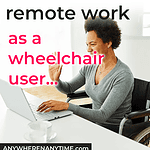

Are you a wheelchair using parent tired of all the complications that come with working away from home? Or maybe your specialized physical needs have made it seem that working just isn’t in the cards for you? In our digital reality, more parents are seeking to balance family needs and work lives. That makes working from home a great option for many. But how will you know if a remote job or business is right for you? Here are some of the factors wheelchair users should consider when applying for WFH jobs.
If you keep these questions in mind while you search for the best opportunity, you’ll be able to spot the ones that can meet your needs. You’ll also have a better idea of how and when to advocate or provide for any accommodations you need.
So whether your family needs more income, or you’re just looking for a career that can fulfill you right from a home that already meets your needs, read on!
Spotting Inaccessibility in Job Descriptions
Just like with all advertisements, sometimes remote job postings or work-from-home business opportunities can be misleading. Here are just a few things to look out for:
- Inflexible or unrealistic schedules. The above video about spoon theory explains how your energy can be depleted. This holds true whether you’re an employee or a freelancer, so you’ll need to be able to adapt. Do your condition and parental commitments require a light work schedule? Do you have good and bad days, so that you can’t be sure when or how much you can work? If you’ll be in constant danger of running out of spoons before your work is done, that can add stress and exhaustion that outweigh the benefits.
- Claims of being “fully remote” are exaggerated. For example, some “fully remote” jobs host physical events they expect employees to attend. This might require you to travel and take on the challenges wheelchair users face as passengers. You may find yourself navigating flights, subways, or trying to find accessible rideshares in an unfamiliar location.
- Lack of basic accommodations for your disability. If a remote work company isn’t willing to provide or reimburse you for specialized equipment you need to do the work, such as ergonomic furniture or adaptive technology, you will have to cover the expense on your own. That could keep the job from being a viable alternative if finances are a concern.
Think ahead about what you’ll need to succeed at the work-from-home career or job. Before applying or starting your own business, clarify things like travel expectations, work hours, and if you’ll need adaptations. If applying to a company, be sure they are committed to understanding and meeting your needs.
Assessing Your Home Workspace
When you are a parent managing a work-from-home career or remote job with limited mobility, an accessible workspace is essential. You’ll need to think about various aspects of the space you plan to work in:
- If you will need to move between different locations and devices throughout your day, do you have a way to do this seamlessly?
- Is it easily navigable, or will you need help?
- Is it close enough to other important spaces in your home, like the kitchen, bathroom, and children’s rooms?
- If you’ll be working and caring for your children at the same time, can you meet both needs from this space?
- Can you easily reach lights and electrical outlets?
- Will you need adaptive equipment or technology such as a height-adjustable desk, pressure-reducing cushion, or specialized keyboard?
Taking the time to evaluate the needs of your career and your body will help things go more smoothly. Making sure your environment can support both your parenting and your work will pay great dividends!
Knowing Your Rights Around Accommodations
If you accept a remote job through a company, you have the right to request accommodations under laws like the Americans With Disabilities Act (ADA). Look for language in job postings that mentions “inclusive” or “accessible practices.” During interviews, assess how willing the employer is to support your accessibility needs without judging you based on your disability.
If you don’t quite know how to bring up accommodations, you can frame the conversation around how they make you more productive. This could mean assistive technology, flexible work hours, or whatever else you’ll need to do the job well.
If it makes you uncomfortable, you don’t have to disclose your disability to an employer. That’s always your choice to make.
Things are a little different when you freelance. You won’t have to consider the factors a wheelchair user applying for WFH jobs needs to, because you will be your own boss.
But that freedom comes with the responsibility of meeting your own needs. Remember to give yourself the same accommodations an employer would be legally obligated to provide. If you don’t, you, your business, and your clients may suffer.
If you need pointers, disabled work-from-home mom of three Tammy Durden shared how she advocates for herself with herself in our interview.
Developing New Strengths
Being a work-from-home parent is a challenge, wheelchair user or not. Adjusting for your limitations can add more obstacles to navigate as you begin this new life journey.
You’ll also have many other new things to learn. Remote and freelance work often introduce techniques and technology you’re not familiar with. You may want to hone these skills before starting your job-seeking. Mentioning any training you’ve acquired can help in the interview process.
Or maybe you’d rather get off and rolling in a new direction you chart for yourself. These free resources from legitimate work-from-home training courses might be the perfect way to test-drive some options before making a commitment.
Conclusion: You Can Work-From-Home As A Wheelchair User
Parenting and work-from-home job hunting both are tough enough, and being a wheelchair user adds another layer of difficulty. But with the right preparation, you can secure a remote role or build a work-from-home business that fits your goals. Remember these factors wheelchair users should consider when applying for WFH jobs, and you’ll be on your way. Vet employers and your space for accessibility, flexibility, and support for your accommodations. By asking the right questions and seeking the right tools, you’ll set yourself and your family up for success.